
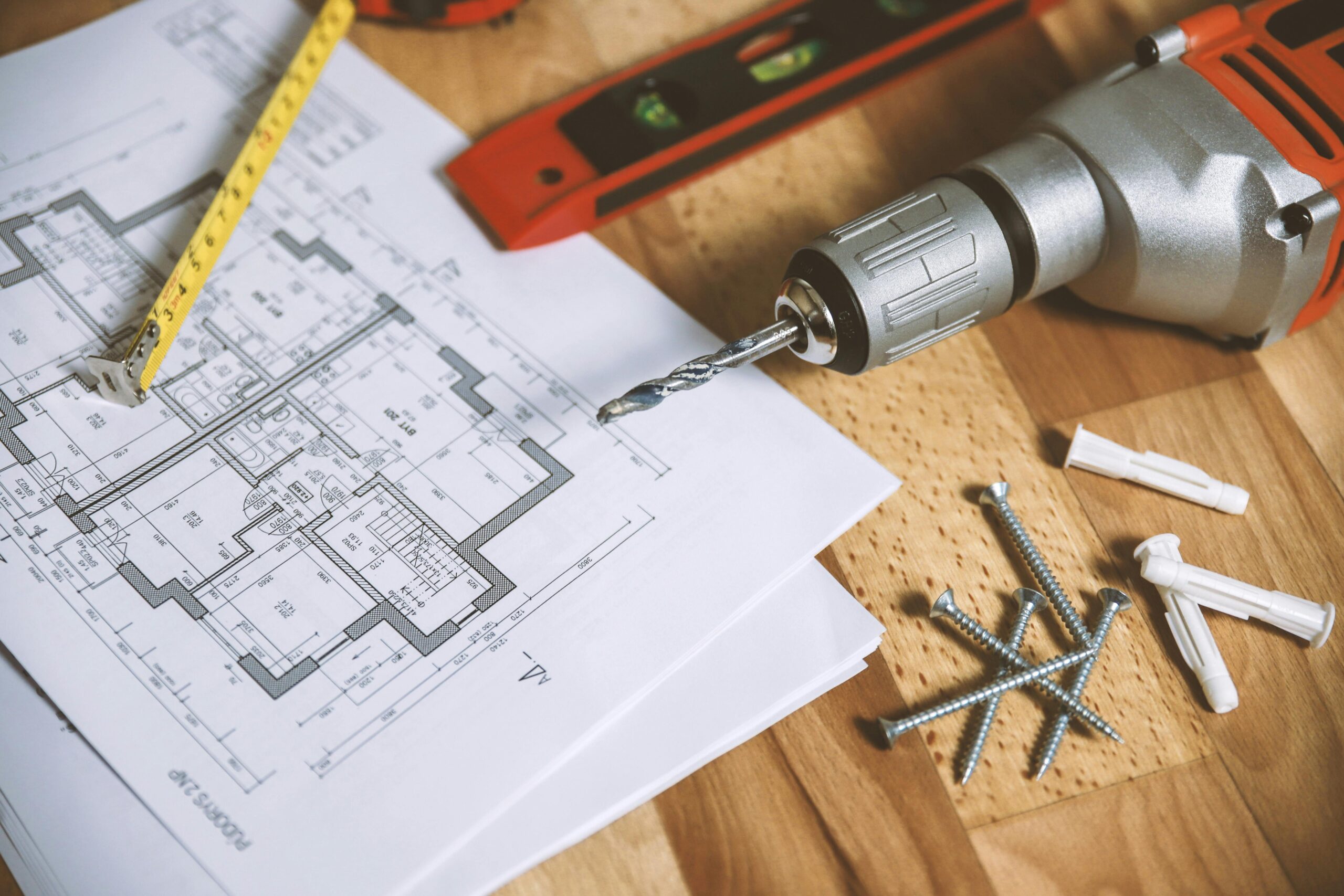
Building your own home or taking on a major renovation is one of the most exciting things you can do. It is also one of the most financially complex. A standard mortgage is designed for a property that already exists; when the home is still a set of blueprints and a building permit, the financing works quite differently.
If you have been researching construction mortgages in BC, you have likely run into a fair amount of confusing jargon and conflicting information. This guide breaks it all down in plain language: how construction financing works, what a draw schedule actually means for your budget, when a completion mortgage might make more sense, and what you need to qualify. We also cover the different property types Spark Mortgage works with and walk you through what the application process looks like with us.
How a Construction Mortgage Differs from a Standard Mortgage
With a standard mortgage, the lender advances the full loan amount at closing, and you begin making principal and interest payments. The property is already built, so the lender has a clear asset to lend against.
A construction mortgage works differently. Because the home does not yet exist, the lender cannot simply advance the full amount up front. Instead, funds are released in stages as construction progresses. During the build, you typically pay interest only on the money that has been drawn down, not on the full loan amount. Once construction is complete, the mortgage converts to a conventional term with regular principal and interest payments.
This staged approach protects both the lender and the borrower. The lender ensures money is tied to actual progress on the project; you avoid paying interest on funds you have not yet needed. The trade-off is that the process involves more oversight and documentation than a standard purchase mortgage.
Because lenders are taking on more risk with an unfinished asset, qualifying criteria tend to be stricter, and the process involves a bit more back-and-forth. Working with a lender who understands construction projects and is willing to apply common sense, rather than rigid checklists, makes a significant difference.
The Draw Schedule Explained
The draw schedule is the roadmap that governs when funds are released throughout your build. Each draw is tied to a defined construction milestone, and most lenders require a site inspection before releasing each payment. Common draw stages for a residential new build look something like this:
- Draw 1: Foundation complete
- Draw 2: Framing complete
- Draw 3: Lock-up (exterior walls, roof, windows, and doors in place)
- Draw 4: Mechanical rough-in complete (plumbing, electrical, HVAC)
- Draw 5: Completion (final inspections passed, occupancy permit issued)
The number of draws and the percentages released at each stage can vary depending on the lender, the size of the project, and the type of construction. Typically, you receive somewhere between 10% and 35% of the total loan at each draw.
Understanding your draw schedule before you break ground is critical. Your general contractor will have their own payment schedule, and the two need to align closely so you are not left covering gaps out of pocket. A good lender will work with you to structure draws in a way that makes practical sense for your project, not just what is easiest to administer on their end.
What Is a Completion Mortgage?
A completion mortgage is a simpler arrangement: funds are advanced in a single lump sum when construction is fully complete and the property is ready for occupancy. This type of financing is common when you are purchasing a newly built home from a developer or production builder, where the builder carries the construction costs themselves and you simply buy the finished product.
If you are buying a pre-sale property in BC, chances are you will be dealing with a completion mortgage. You sign the purchase contract early in the process, arrange your financing well in advance, and the mortgage funds on the date the builder hands over the keys.
The key distinction from a draw mortgage is that the builder, not the borrower, manages the construction cash flow. That simplifies things considerably on your end, though it does mean less control over the building process itself.
Eligibility: What Do Lenders Look At?
Qualifying for a construction mortgage involves more documentation than a standard purchase. Here is what most lenders, including private lenders like Spark Mortgage, will want to review:
Your financial picture. Income, credit history, and overall debt load all factor in. For conventional construction financing, a down payment of 20% or more is typically required. Private lenders can sometimes work with borrowers who do not fit neatly into the standard qualifying mould.
A detailed construction plan and budget. Lenders want to see realistic, itemised cost estimates, a construction contract with a licensed general contractor, and a clear project timeline.
Permits and approvals. Building permits should be in place, or at minimum, confirmed to be in process before funding. Zoning and land-use approvals need to be sorted out as well.
A licensed builder. Most lenders require that construction be carried out by a licensed general contractor rather than on a fully owner-builder basis, though exceptions exist depending on the circumstances.
If you have been turned down by a bank or credit union due to income complexity, a self-employed situation, or past credit challenges, a private lender may still be able to find a workable solution for your build.
Property Types: Residential, Commercial, and Acreage
Construction financing in BC is not a one-size-fits-all product. The property type matters, and so does the location.
Residential. Single-family custom homes and infill builds in urban and suburban areas are the most common scenario. If you are building your primary residence or a rental property, this is generally the most straightforward type of construction financing to arrange.
Commercial. Mixed-use buildings, small commercial properties, and income-producing builds can be financed through construction mortgages, though the assessment criteria are more complex. Lenders will look closely at the project’s economic viability and the borrower’s experience with commercial projects.
Acreage and rural properties. Building on acreage or in rural BC adds layers of complexity: well and septic requirements, access roads, limited comparables for appraisal, and distance from services. Institutional lenders often shy away from these files. Private lenders with experience in rural properties are better positioned to assess them fairly and find workable terms.
Spark Mortgage’s Approach to Construction Financing
Spark Mortgage is a mortgage broker and a private lending company, which means we are not bound by the same rigid standards as a bank. That matters when it comes to construction projects, which rarely fit neatly into a standardized approval process.
We take a common-sense approach. We look at the full picture: the project plan, the borrower’s situation, the property, and the people involved. If a file makes sense, we will find a way to move it forward, and we will be transparent with you about terms, costs, and timelines from the start.
Here is what working with us typically looks like:
- Initial conversation. We want to understand your project and your situation before anything else. No forms, no pressure.
- Review of the file. We look at the construction plans, budget, timeline, and your financial profile.
- Offer and terms. If we can help, we present clear, straightforward terms. If we are not the right fit, we will be honest about that too.
- Funding and draws. We work with you and your contractor to structure a draw schedule that keeps the project moving.
- Project completion. Once your build is done, we help you transition to a longer-term mortgage solution that fits your new circumstances.
Frequently Asked Questions
Can I get a construction mortgage with less-than-perfect credit? Yes, in many cases. As a private lender, Spark Mortgage can consider files that banks have declined. We look at the overall picture, not just a credit score.
How many draws are typical for a residential build? Most residential construction mortgages have four to six draws, tied to major milestones. The exact structure depends on the project and the lender.
What happens when construction is complete? The construction mortgage needs to be replaced with a conventional mortgage or repaid. We’ll help you plan for this transition before the project even begins.
Do I need a licensed general contractor? Most lenders require it for insurance and liability reasons. Owner-builder situations can sometimes be accommodated on a case-by-case basis.
Can I finance a renovation with a construction mortgage? For major renovations, a construction mortgage can be an appropriate tool, particularly if the scope of work is significant and requires staged funding. For smaller projects, a home equity loan or line of credit may be a simpler option.
Is construction financing available for acreage in rural BC? Yes. Spark Mortgage has experience with rural and acreage properties, which many institutional lenders avoid. We assess each file on its merits.
Ready to Get Started?
A construction project is a big undertaking, and getting the financing right from the beginning makes everything else easier. If you are planning a new build or major renovation in BC and want to talk through your options with a lender who will give you straight answers, we would be glad to hear from you.
Apply now or contact Spark Mortgage today. There is no obligation, just a straightforward conversation about what is possible.